
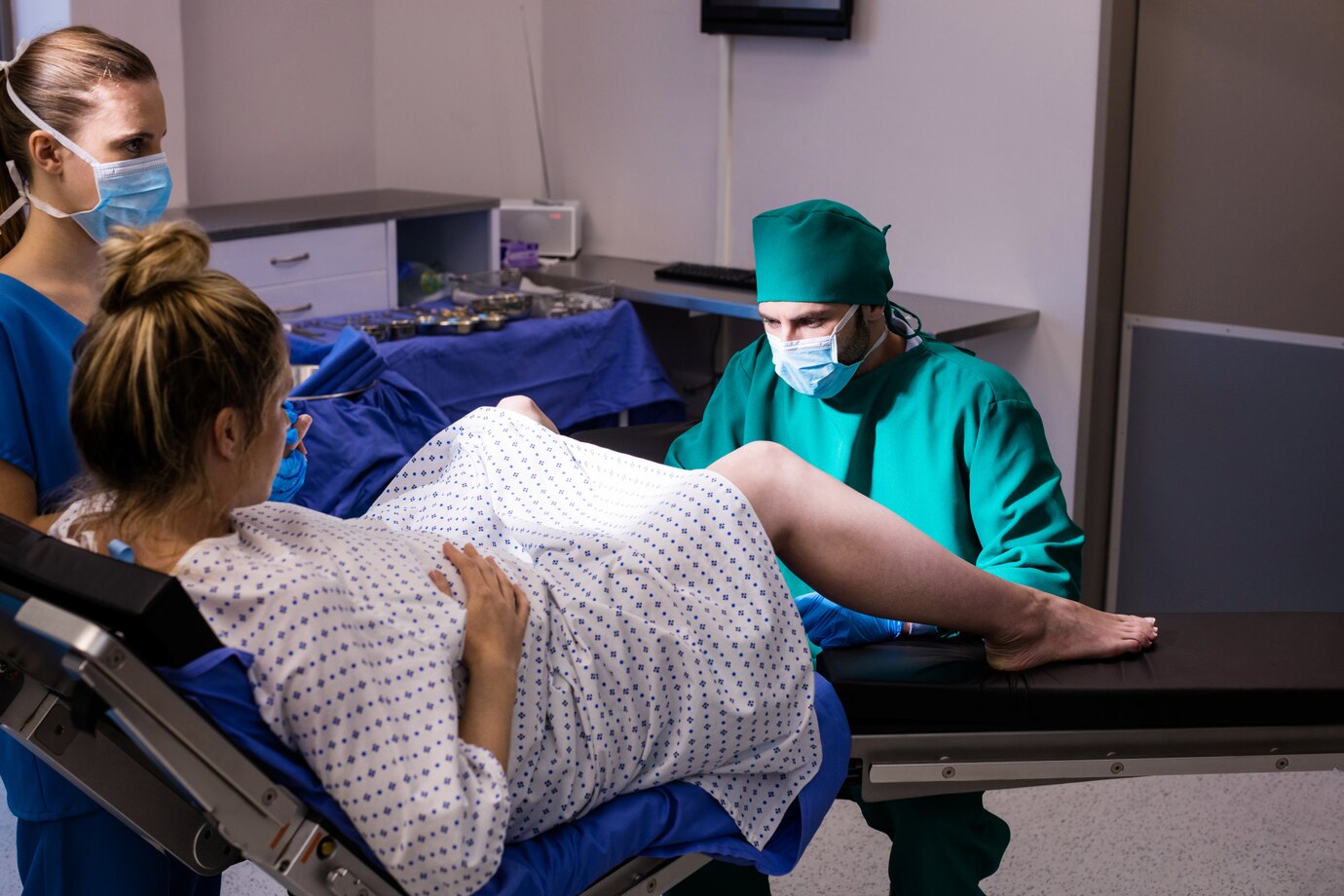
As the due date approaches, many pregnant women begin thinking about how labour may unfold. Questions about contractions, pain, hospital admission, delivery positions, and the possibility of a caesarean birth can become increasingly important. While no one can predict every detail of labour, good antenatal care can help a woman understand what to expect and prepare for different possibilities.
A vaginal birth is a physiological process, but it still requires appropriate medical monitoring and support. The aim of maternity care is not simply to achieve a particular mode of delivery at any cost. It is to protect the health of the mother and baby while allowing labour to progress safely and involving the woman in decisions about her care. The World Health Organization emphasises respectful, woman-centred care, effective communication, appropriate monitoring, and emotional support during labour.
A vaginal delivery occurs when the baby is born through the birth canal rather than through a caesarean operation. When labour progresses without a medical need for surgical or instrumental intervention, it may be described as a spontaneous vaginal birth.
However, every vaginal birth is different. Labour may progress quickly for one woman and take considerably longer for another. Some women may require pain relief or medical assistance during labour while still giving birth vaginally.
The priority should therefore be a safe delivery rather than trying to make every birth follow exactly the same pattern.
Preparation for delivery begins well before contractions start. Regular pregnancy appointments allow the obstetrician to monitor the mother's health, assess the baby's growth and position, identify risk factors, and investigate concerns that may affect delivery planning.
Conditions such as high blood pressure, diabetes during pregnancy, anaemia, previous caesarean birth, abnormal fetal position, or other pregnancy complications may influence the delivery plan. Identifying these factors beforehand allows the medical team to discuss the safest options rather than making decisions unexpectedly at the last moment.
Once labour begins, the mother's condition and the baby's wellbeing are monitored according to the clinical situation. Healthcare professionals assess the progression of contractions, cervical changes, maternal vital signs, and fetal wellbeing as appropriate.
Labour does not necessarily progress at exactly the same pace for every woman. A slower phase does not automatically mean that a caesarean birth is required. The clinical picture as a whole is considered before deciding whether labour needs additional support or intervention.
This individualised approach is consistent with WHO guidance, which recognises that labour progression varies and recommends woman-centred, evidence-based care.
Pain is one of the biggest concerns for many first-time mothers. Labour discomfort can be managed in different ways, and the appropriate options depend on the mother's preferences, medical condition, stage of labour, and available facilities.
Breathing and relaxation techniques, movement, changes in position, emotional support, and medication-based pain relief may all have a role. Discussing available options before labour can help women feel less uncertain when contractions become stronger.
Support during labour also matters. WHO recommends respectful maternity care, effective communication, and appropriate companionship as components of quality childbirth care.
Women may be able to change positions or move during labour when medically appropriate. Remaining in a comfortable position can sometimes help a woman cope with contractions and participate more actively in the birth process.
The position used for delivery itself may vary according to the mother's comfort, the baby's position, clinical circumstances, and the healthcare team's assessment. There is no single position that is ideal for every woman.
Discussing mobility and birth positions with the maternity team beforehand can help the mother understand what may be possible during her labour.
Planning for a vaginal delivery does not mean refusing a caesarean when it becomes medically necessary. Circumstances can change during pregnancy or labour.
A caesarean may be recommended when there are concerns about the baby's wellbeing, certain placental problems, abnormal fetal position, labour complications, or other maternal or fetal conditions. In some situations, assisted vaginal delivery using instruments may also be considered when clinically appropriate.
The safest mode of birth depends on the circumstances at that time. A planned vaginal birth should therefore always include the understanding that medical intervention may become necessary if safety requires it.
As the due date approaches, women often wonder whether every contraction means labour has begun. True labour contractions generally become stronger and more regular, while false contractions may not follow the same pattern. Other signs, such as rupture of membranes, can also indicate that medical assessment is needed.
Heavy vaginal bleeding, severe constant pain, reduced fetal movement, or suspected rupture of membranes are reasons to contact the obstetric care provider or seek medical assessment promptly.
Having clear instructions from the obstetric team before the due date can prevent confusion when these changes occur.
Preparing for childbirth is not only about packing a hospital bag. Women can discuss their preferences, pain-relief options, possible interventions, birth companion arrangements, and questions about delivery with their healthcare provider.
At the same time, flexibility is important because labour cannot always be predicted. A birth plan should communicate preferences while allowing medical decisions to change when circumstances require them.
Good communication can help women feel informed rather than simply being told what is happening during an important and often intense experience.
Care does not stop immediately after delivery. The mother is monitored for bleeding, vital signs, pain, and early recovery, while the newborn receives appropriate assessment and care.
The immediate postpartum period also provides an opportunity to discuss breastfeeding, recovery, warning signs, and follow-up. WHO considers care during the immediate period after birth part of quality intrapartum and postnatal care.
1. Can every pregnant woman have a vaginal delivery?
Not necessarily. The possibility of vaginal birth depends on the mother's health, baby's position and wellbeing, pregnancy complications, previous obstetric history, and circumstances during labour.
2. Does choosing vaginal delivery mean avoiding all pain relief?
No. Women can discuss available pain-management options with their obstetrician. The appropriate method depends on individual circumstances and the facilities available.
3. Can a planned vaginal birth change into a caesarean delivery?
Yes. If a medical situation develops that makes vaginal birth unsafe for the mother or baby, the delivery plan may need to change. The priority is always safe maternal and newborn care.
A positive birth experience is not about following a rigid script; it is about receiving appropriate medical care while being informed and supported throughout labour. Dr. Geeta Agrawal at Prime Care Clinic supports expectant mothers with personalised pregnancy and delivery care, including guidance for those planning Normal Vaginal Delivery in Gurugram Sector 94. Schedule an appointment to discuss your pregnancy, delivery preferences, and the factors that may influence your birth plan.
Dr. Geeta Agrawal Gynaecologist.All Rights Reserved © 2026


